

Jim Willis, 4DR's Ranch Manager, asked this question too before committing to a grass-finished program.
"Most, if not all, Wagyu is a grain-finished product. That's how it's been done since the early days of Wagyu breed development in Japan. They keep them fairly well confined, feed them a lot of grain over a long period of time, which lends itself to more and more marbling. And you get into some Wagyu offerings that are almost like meat butter. It's more fat than it is meat."
So, the question facing 4 Diamond Ranch was whether those flavorful genetics would still express themselves in a grass-finished system, or whether the marbling potential would disappear without the grain.
"We took a couple test runs just to see how they'd turn out. Our first couple tries actually showed that it differentiated itself significantly from typical grass-finished angus."
That result is what launched 4 Diamond Ranch's direct-to-consumer business. Not a marketing strategy, not a brand exercise. A test that worked, and a product that didn't exist anywhere else.
What "Grass-Finished" Actually Requires
Here's where a lot of grass-finished beef earns a bad rap, and Jim doesn't sugarcoat it.
"There's a misconception that grass-finished animals are just turned out on grass, and then one day you go grab them and harvest them. Well, yeah, then you're going to get real lean animals, yellow fat, all the things that quite a few people complain about with grass-finished animals. But if you're grazing with intention, you can make some pretty good quality grass-finished animals."
At 4 Diamond Ranch, that intention looks like this: cattle are finished on irrigated pastures, grazed while the grass is actively growing, green, and mostly leaf. Grazing cattle on forage when it is at its most nutritious stage of growth, cattle can gain weight at a rate closest to a feedlot animal, while still being completely grass-fed and finished.
While it is ideal to have cattle get to their finished weight during the growing season, some cattle will need to be supplemented with high quality hay as available forage quality drops off in the fall and winter. By maintaining this high nutritional level the cattle are able to finish with good marbling and fat color.
"It's less about specifically what they're eating than it is about when they eat it."
On the Marbling
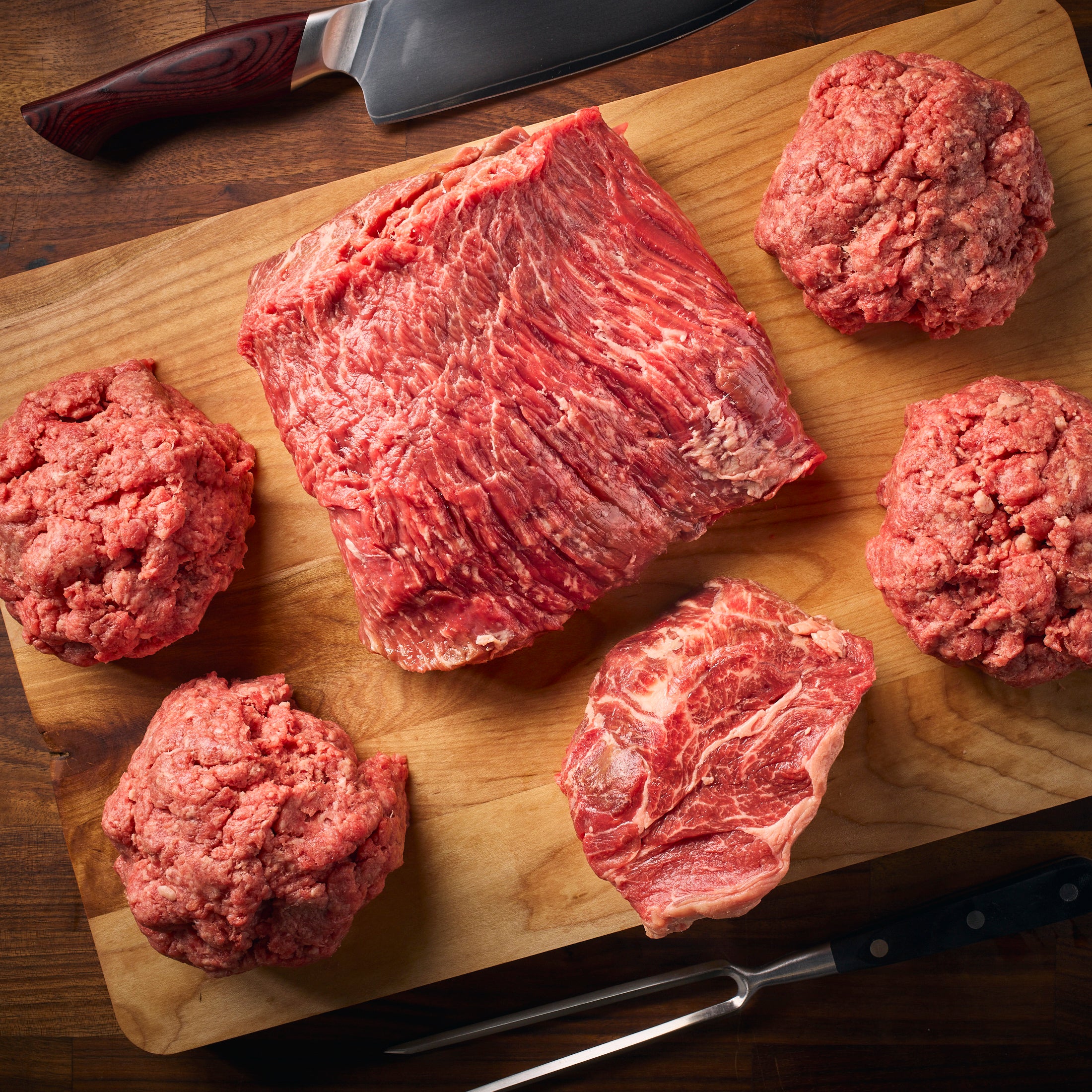
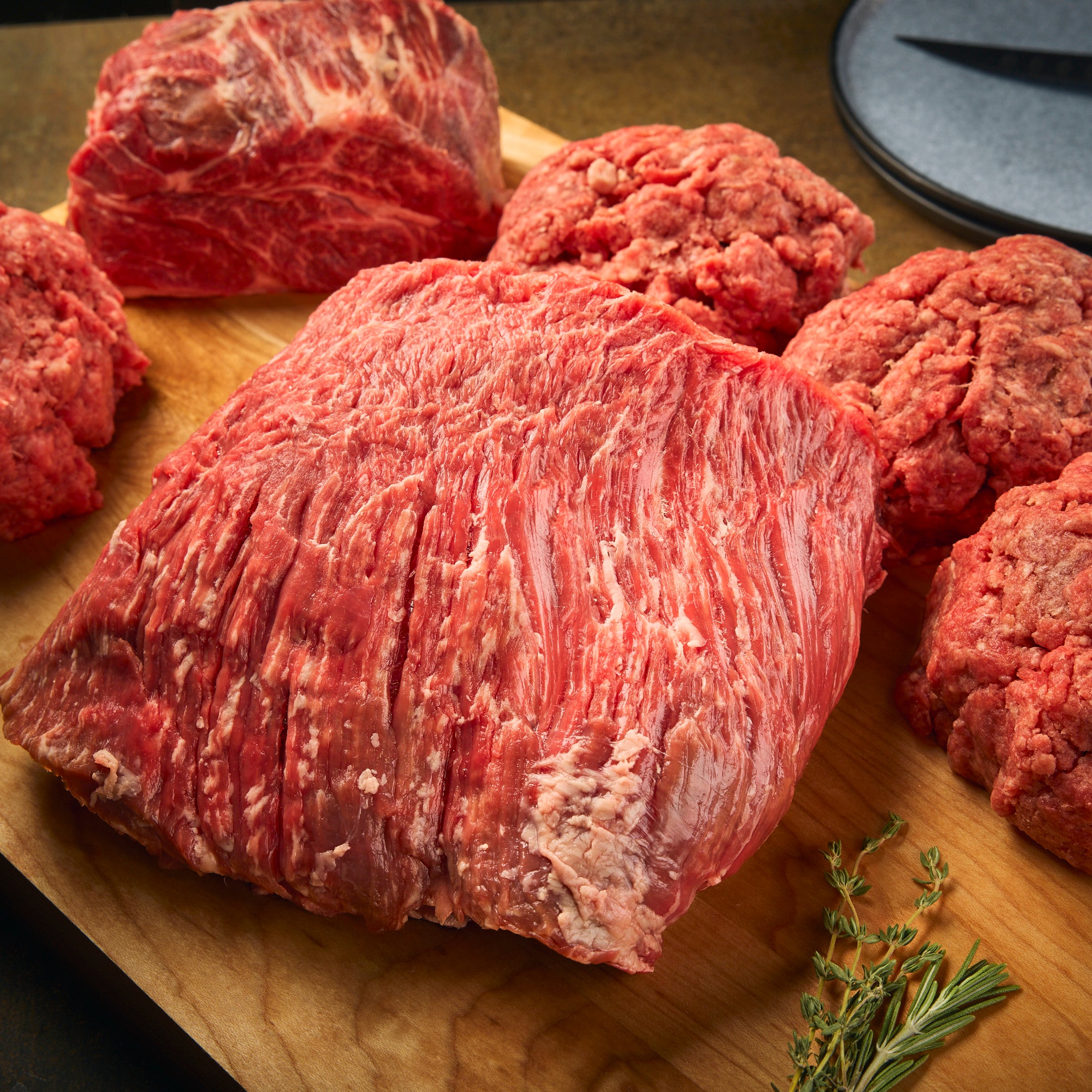
Our beef doesn't look like the Wagyu you saw on your trip to Japan. That's intentional.
We're not trying to make meat butter. We're using Wagyu genetics for what Jim calls their "inherent predisposition toward marbling," to produce grass-fed beef that has flavor and tenderness without needing the grain finish. As Jim puts it, we don't provide the most heavily marbled A5 experience, but if you want Wagyu flavor with grass-fed benefits, then this is for you.
Our goal is crafting the best grass-finished beef that can be produced. The Wagyu influence is what gives us an edge over standard grass-finished, and our customers have consistently told us they can taste the difference.
Final Thoughts
Jim's been eating grass-finished beef for nearly 20 years… He's skeptical of the bigger claims some brands make. His take is refreshingly straight:
"Beef is a good source of nutrition. It contains a lot of vitamins and minerals that you don't get elsewhere, in concentrations per calorie that are great for you. You don't have to eat that much beef to get a lot of good nutrition out of it."
That's the version of beef we believe in. Not a miracle product. Not meat butter. Just well-raised beef from cattle we've spent years developing for this exact system, on Montana pasture, finished the right way.
Try it and see if you can taste the difference. We think you will.